Commercial Boiler Considerations for Government, Military, and Public Facilities
A boiler project can involve more than selecting equipment with enough capacity. Public facilities often have strict project requirements, controlled access, funding limitations, and long operating horizons. These factors make commercial boiler planning different from a straightforward equipment replacement.
Plan Around Long-Term Facility Requirements
Boiler equipment can remain in service for many years, so today's decision can influence facility operations well into the future. A replacement should account for anticipated building use, planned renovations, and changes to heating or process requirements. Looking beyond the immediate project can help prevent another capacity or compatibility problem later.
Facility plans can change significantly during the life of a commercial boiler. Buildings may be expanded, repurposed, consolidated, or assigned new functions. Equipment selection should leave reasonable flexibility for those changes without creating unnecessary capacity or complexity.
The mechanical room itself should also be evaluated as part of long-term planning. Available space, equipment access, piping routes, ventilation, fuel infrastructure, and electrical service can all affect future options. A solution that fits today's conditions may become restrictive after another facility project.
Commercial Boiler Projects May Require Detailed Documentation
Publicly funded projects often involve more documentation than a typical private equipment purchase. Drawings, equipment specifications, submittals, schedules, testing information, and commissioning records may all become important project documents. Keeping these materials organized helps create a useful record for future facility teams.

Documentation also supports continuity when personnel change. The person overseeing a commercial boiler project today may not be responsible for the facility several years later. Complete records give future teams valuable information about what was installed and why.
As-built information deserves particular attention. Accurate documentation of equipment, piping, controls, and connections can make future repairs and modifications easier. It can also reduce the time needed to investigate unfamiliar equipment arrangements.
Consider Security and Controlled Access
Some facilities have strict requirements regarding who can enter buildings, mechanical rooms, and restricted areas. Boiler projects must account for those requirements before technicians or equipment arrive on site. Access procedures can affect scheduling, deliveries, inspections, and installation activities.
Project planning should identify access requirements early. Personnel may need credentials, escorts, background approvals, or scheduled entry windows. Equipment deliveries can also require coordination with security personnel and facility representatives.
These conditions can affect project duration without having anything to do with the boiler itself. Allowing additional time for access coordination can produce a more realistic schedule. It also reduces the risk of equipment or service personnel arriving before the site is ready to receive them.
Evaluate Commercial Boiler Redundancy
Some public facilities cannot easily tolerate losing heating or steam capacity. The consequences may include building closures, damage to sensitive equipment, interrupted services, or operational delays. Redundancy can provide another layer of protection when continuous boiler operation matters.
Redundancy does not always mean installing two identical boilers. The appropriate arrangement depends on the facility's loads, available space, operating requirements, and acceptable level of risk. Multiple smaller units, standby equipment, or other configurations may provide different advantages.
The system should also be evaluated during maintenance periods. A facility may have adequate capacity under normal conditions but lack sufficient capacity when one boiler is offline for planned service. Reviewing those scenarios can provide a more realistic picture of system resilience.
Account for Funding and Lifecycle Costs
Initial purchase price is only one part of a boiler project's financial impact. Fuel consumption, maintenance requirements, replacement parts, controls, water treatment, repairs, and eventual replacement can all affect total ownership costs. Comparing options through a lifecycle perspective can produce better long-term decisions.
A less expensive piece of equipment may have different operating or maintenance requirements than a higher-efficiency alternative. Those differences can become significant over years of operation. Evaluating the expected service life and operating profile can help put the initial investment into context.
Budget timing can create another challenge. Public projects may operate within defined funding cycles that do not align perfectly with equipment needs. Identifying developing capital requirements early can give facility planners more time to build a realistic replacement strategy.
Existing Infrastructure Can Shape the Solution
Replacing a boiler does not necessarily mean replacing every connected component. Existing pumps, piping, controls, electrical infrastructure, and distribution systems may remain useful. Each component should be evaluated based on its condition, compatibility, and role within the proposed system.
Older infrastructure can also create unexpected constraints. Existing connections may not match modern equipment, and previous modifications may not be fully reflected in available drawings. A site evaluation can uncover these conditions before installation begins.
Modern controls can create additional integration considerations. A new boiler may need to communicate with building automation or other facility systems. Compatibility should be addressed during design rather than discovered after equipment arrives.
Schedule Work Around Facility Operations
Commercial boiler projects can require shutdowns, temporary service arrangements, equipment deliveries, and work in occupied areas. Public facilities may have limited opportunities to interrupt normal operations. Project schedules should therefore account for how the work affects the building beyond the mechanical room.
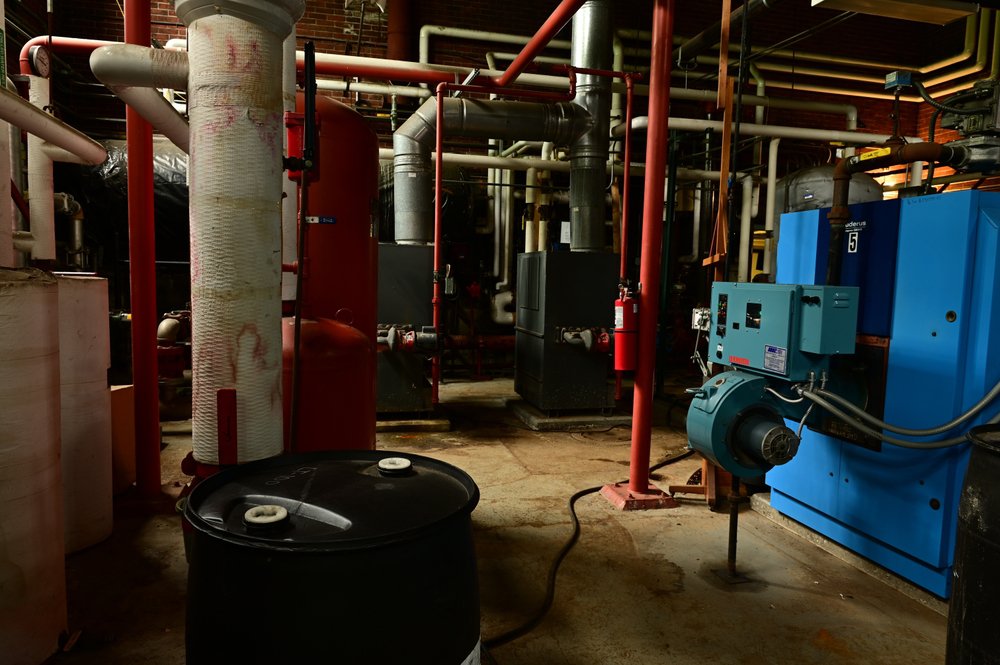
Phased work can sometimes reduce disruption. Certain components may be installed or prepared before the existing boiler is removed. Temporary equipment may also provide an option when a longer interruption cannot be accommodated.
The timing of the work matters as well. Seasonal heating requirements, facility events, fiscal deadlines, and other scheduled activities can influence the best project window. Coordinating those factors early can make the installation process more predictable.
Think About Equipment Availability and Parts Support
A boiler project does not end when the equipment starts operating. Parts availability and technical support can influence how easily future repairs are completed. Equipment with readily available components can provide practical advantages throughout its service life.
Controls deserve particular attention because they can become outdated faster than the underlying boiler equipment. A facility may continue operating a sound boiler while facing challenges with obsolete controls. Evaluating supportability can therefore be just as important as evaluating the initial equipment specifications.
Facility teams should also consider who will service the equipment. Clear service arrangements can reduce uncertainty when repairs are needed. Establishing those expectations during project planning can support better long-term ownership.
Prepare for Future Commercial Boiler Projects
A boiler replacement can provide an opportunity to improve more than immediate equipment performance. It can reveal infrastructure limitations, outdated controls, inefficient configurations, and other conditions that may influence future facility projects. Capturing those findings can help inform long-term capital planning.
We approach commercial boiler projects with those broader considerations in mind. Boiler Pros can evaluate existing systems and work within site requirements through complete boiler solutions that account for equipment, infrastructure, project constraints, and long-term operational needs. Contact us today to get a free quote.